.png)
.png)
.png)
Solar, Battery Backup, and Bi-Directional Charging: How to Build True Energy Independence for New Jersey and New York City Homes

If you've been researching ways to protect your home from power outages, lower your electric bills, or take more control over where your energy comes from, you've probably encountered three technologies repeatedly: solar power, battery backup, and bi-directional charging.
At PowerSourceEV, we get asked an important question regularly: which one does a homeowner actually need?
The honest answer is that each technology solves a different problem. Solar generates electricity. Battery storage saves electricity for later. Bi-directional charging allows a compatible electric vehicle to become another source of stored energy for your home. When these technologies are designed to work together, they can provide substantially greater energy independence than any one system can provide on its own.
This is particularly relevant for homeowners throughout New Jersey and the greater New York City area. From Bergen County and Essex County to the Jersey Shore, the Hudson Valley-adjacent communities, and the five boroughs of New York City, homeowners face different combinations of severe weather, aging electrical infrastructure, rising energy costs, and increasing electricity demand from EVs, heat pumps, air conditioning, and other high-load appliances.
In this guide, PowerSourceEV explains how solar, battery backup, and bi-directional vehicle-to-home charging work, what each technology can and cannot do, how they can be combined, and why homeowners with existing solar are increasingly considering battery storage.
We'll also look at real-world situations across New Jersey and New York City so you can better understand how these systems can perform when the grid isn't available.
Why Energy Independence Matters Across New Jersey and New York City
Power outages aren't limited to one part of the region.
New Jersey homeowners may experience outages caused by nor'easters, summer thunderstorms, ice storms, heavy snow, high winds, coastal storms, and hurricane remnants. Conditions can look very different in Sussex County than they do in Cape May County, but the result can be the same: a household suddenly loses access to electricity.
The same is true across New York City. A homeowner in Staten Island may be concerned about coastal weather and flooding, while someone in Queens or Brooklyn may be more focused on electrical capacity, extreme summer heat, or the consequences of losing power in a densely populated neighborhood. Manhattan and the Bronx present their own challenges, particularly for homeowners and properties where electrical systems, backup requirements, and available space can differ considerably from a typical suburban property.
At the same time, electricity consumption is changing.
More homeowners are installing EV chargers, central air conditioning, heat pumps, electric water heaters, induction appliances, and other electric equipment. An electric vehicle can represent a substantial new electrical load, but it can also become an energy asset when the vehicle and charging equipment support bi-directional power flow.
That creates an opportunity.
Instead of viewing your home, solar panels, battery, EV, and electrical grid as completely separate systems, modern energy management can allow them to work together.
Let's break down each component.
Solar Power: Generating Your Own Electricity
How Solar Works
A solar array installed by PowerSourceEV converts sunlight into direct current electricity through photovoltaic panels. An inverter then converts that electricity into alternating current power that your home can use.
During the day, your solar panels can generate electricity for household loads such as lighting, refrigeration, HVAC equipment, appliances, electronics, and EV charging.
If your solar system produces more electricity than your home is using at that moment, the excess can potentially be sent to the grid under the applicable utility and compensation program, or stored in a compatible battery system for later use.
This basic concept applies whether your home is in Bergen County, Mercer County, Monmouth County, Middlesex County, or farther south toward Atlantic or Cape May counties.
The important question isn't simply whether your roof receives sunlight. It is how that solar generation fits into your household's complete energy profile.
Benefits of Solar
Solar power can provide several benefits for homeowners throughout New Jersey and New York City.
Lower Monthly Electric Bills
Every kilowatt-hour your solar panels generate is electricity you may not need to purchase from your utility.
For homeowners facing increasing electricity consumption, generating some of that electricity onsite can help offset grid purchases.
Protection Against Rising Utility Costs
Once a solar system is installed, it can produce electricity for many years. That can reduce the household's exposure to future increases in utility electricity costs.
This can be particularly attractive for homeowners who expect their electricity usage to increase because of EV ownership, home additions, electrification, or increased air conditioning use.
Increased Energy Independence
Solar allows a home to generate electricity rather than relying entirely on the utility grid.
However, there is an important distinction between generating your own electricity and having backup power.
Solar alone does not necessarily keep your home powered during an outage.
Long System Lifespan
Modern solar panels are designed for decades of operation with relatively little routine maintenance.
For a homeowner considering solar as a long-term investment, that lifespan can make the technology useful well beyond its initial installation period.
Solar Doesn't Automatically Provide Backup Power
Here's an important point many homeowners don't discover until they research backup power:
Solar panels alone generally do not keep a standard grid-tied home powered when the utility grid goes down.
A conventional grid-connected solar system is designed to shut down during a utility outage. This prevents electricity from being sent back onto utility lines while crews may be working to restore power.
So imagine a summer storm moving through Bergen County, Union County, Essex County, or Middlesex County.
The sun comes back out.
Your solar panels may be perfectly capable of producing electricity.
But without the appropriate backup equipment and islanding capability, your home cannot simply continue operating from those panels while the grid remains down.
That is one of the primary reasons PowerSourceEV pairs solar with battery storage for homeowners who want both energy savings and meaningful outage protection.
Battery Backup: Storing Power for When You Need It Most
How Home Battery Backup Works
A home battery stores electricity so it can be used later.
A system such as the Tesla Powerwall or an EcoFlow smart panel and battery system can store energy generated by solar panels or, depending on the configuration and utility rate structure, electricity from the grid.
PowerSourceEV installs these systems as a Tesla Certified Installer and designs the electrical configuration around the homeowner's specific goals.
When the utility grid fails, a properly configured battery system can disconnect the home from the grid and begin supplying electricity to the home.
The transition can happen extremely quickly, helping critical household equipment remain operational.
That difference matters during an outage.
Instead of manually starting a generator, connecting extension cords, finding stored fuel, or deciding which appliances need to be disconnected, a properly designed battery system can automatically manage backup power.
Battery Backup Benefits for New Jersey and NYC Homeowners
Protection During Power Outages
A battery can keep selected household systems operating when the utility grid isn't available.
Depending on system capacity and electrical configuration, backup can include equipment such as:
Refrigerators and freezers
Internet equipment
Lighting
Home office equipment
Heating or cooling equipment
Sump pumps
Well pumps
Selected kitchen appliances
Medical equipment
Garage equipment
Other critical electrical circuits
The exact loads a battery can support depend on the system's power output, stored energy capacity, electrical configuration, and the loads connected to it.
Backup Without Gasoline
Unlike a conventional fuel-powered generator, a battery doesn't require gasoline or diesel to operate.
There is no engine noise, exhaust, or fuel storage involved in the battery itself.
That can be especially attractive for suburban properties with limited outdoor space as well as urban properties where conventional generator installations may present additional practical challenges.
Whole-Home or Critical-Circuit Backup
Not every homeowner needs to back up every electrical load.
Some households prioritize refrigeration, internet, lighting, a sump pump, heating equipment, and a few outlets.
Others want a system designed for broader whole-home coverage.
PowerSourceEV can configure a system according to the home's electrical requirements and the homeowner's priorities.
Peak Energy Management
A battery can potentially be used for more than emergencies.
Depending on the utility rate structure and system configuration, stored electricity can be used during higher-cost periods to reduce reliance on grid electricity.
As more homeowners add EVs and other large electrical loads, intelligent energy management can become increasingly valuable.
Scalable Storage
Battery systems can be configured around the amount of energy a home actually needs.
A smaller home with relatively modest electricity consumption may have very different storage requirements from a large property with multiple HVAC systems, an EV, electric water heating, and other significant loads.
This is why battery sizing should not be based solely on the size of the house.
Power vs. Energy: A Concept Every Homeowner Should Understand
One of the most important concepts PowerSourceEV discusses during system design is the difference between power and energy.
Power is measured in kilowatts, or kW.
Energy is measured in kilowatt-hours, or kWh.
Think of power as how much electricity you can use at one time.
Think of energy as how much electricity you have available overall.
For example, a home may have enough stored energy to operate critical appliances for many hours but still have limitations on how many high-power appliances can operate simultaneously.
Conversely, a system may be capable of powering several substantial loads at once but have limited stored energy and therefore provide a shorter duration of backup.
The right system has to account for both.
That is why PowerSourceEV looks at actual household usage, electrical loads, and backup priorities rather than simply recommending a battery based on square footage.
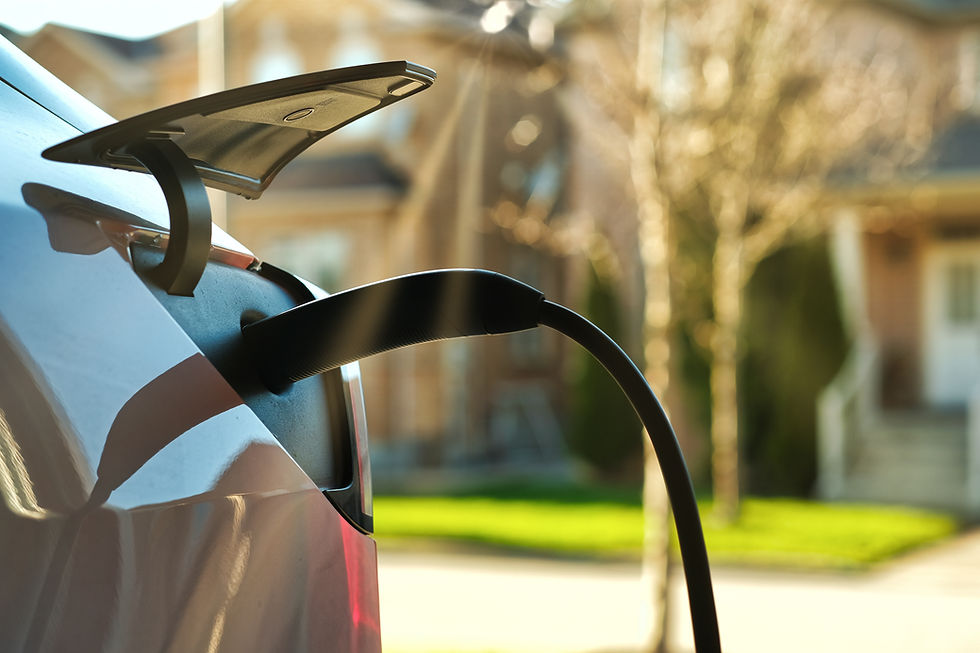
Bi-Directional Charging: Turning Your EV Into a Backup Power Source
What Is Vehicle-to-Home Charging?
Bi-directional charging changes the traditional relationship between an EV and a home.
Normally, electricity flows one direction:
Grid → Charger → EV
With a compatible vehicle, charger, and electrical system, electricity can also flow in the opposite direction:
EV → Home
This is commonly called Vehicle-to-Home, or V2H, charging.
For Tesla owners, the technology may also be associated with Powershare depending on the compatible vehicle and equipment.
Instead of treating your EV solely as transportation, a compatible EV can function as a substantial mobile energy storage resource.
Why an EV Can Be Such a Powerful Backup Resource
Electric vehicle batteries can contain considerably more stored energy than many individual home battery systems.
That means a compatible EV may potentially provide a significant amount of backup energy for a home.
For homeowners who already own an EV, this can be particularly compelling.
Rather than purchasing a separate large stationary battery solely to obtain additional energy storage, the homeowner may be able to use the EV's existing battery as part of an integrated backup strategy.
PowerSourceEV installs compatible equipment and evaluates vehicle compatibility as this technology continues to expand.
Benefits of Bi-Directional Charging
Significant Energy Storage
Many EV batteries can store tens of kilowatt-hours of energy, with some vehicles providing substantially more.
That can represent a meaningful reserve during a prolonged outage.
Make Your EV Do More
An EV already represents a significant investment in battery technology.
With compatible equipment, that battery can potentially serve two purposes: transportation and home energy storage.
Extended Outage Protection
A home battery can handle immediate backup needs, while an EV can provide additional stored energy when a longer outage occurs.
That creates an additional layer of resilience for homeowners who experience extended outages.
Useful for Multi-EV Households
A household with multiple compatible EVs may have even more flexibility.
One vehicle could remain available for transportation while another provides energy to the home, depending on the system and circumstances.
The Limitation of Bi-Directional Charging
Bi-directional charging is powerful, but it isn't a complete replacement for every other form of backup.
Your EV needs to be at home when you need its stored energy.
It also needs sufficient charge.
And while the vehicle is supplying electricity to your home, some of its battery capacity is being used for household energy rather than driving.
That makes V2H most useful when it is integrated into a larger energy strategy.
For many homeowners, the strongest configuration isn't solar versus battery versus EV backup.
It is solar plus battery plus compatible EV charging.
How Solar, Battery Storage, and EV Backup Work Together
This is where integrated energy design becomes especially valuable.
Instead of treating each technology as a separate purchase, PowerSourceEV can design a system in which the technologies complement one another.
Solar + Battery
Solar panels generate electricity during daylight hours.
The battery stores excess energy.
That stored energy can then be used at night or during a utility outage.
This creates a basic cycle:
Solar generation → Home loads → Battery storage → Home loads
When an outage occurs, the battery provides backup power while the solar system can potentially continue contributing energy when the system is properly designed for backup operation.
This can provide:
Partial or whole-home backup depending on system design
Greater use of self-generated solar energy
Reduced reliance on the utility grid
Backup during nighttime outages
A way to make solar generation useful during an outage
Battery + Bi-Directional EV Charging
A home battery and compatible EV can provide two layers of stored energy.
The home battery can respond immediately when the grid fails.
The EV can then serve as a larger reserve of stored energy.
This approach can be particularly valuable for homeowners concerned about prolonged outages.
Imagine a winter storm affecting Morris County, Sussex County, Warren County, and surrounding communities.
The outage lasts longer than expected.
A stationary battery provides the initial backup.
A compatible EV then provides additional stored energy.
Instead of relying exclusively on the initial battery capacity, the household has another energy resource available.
Solar + Battery + Bi-Directional Charging
When all three technologies are properly integrated, the system can:
Generate electricity through solar.
Use that electricity to power the home.
Store excess energy in a home battery.
Use stored energy during nighttime or high-cost periods.
Automatically provide backup power when the grid fails.
Use a compatible EV as an additional energy reserve.
Potentially recharge stored energy through solar during extended outages.
Reduce dependence on the utility grid during normal operation and emergencies.
This is the foundation of a more comprehensive energy independence strategy.
What This Looks Like Across New Jersey
New Jersey is geographically diverse, and energy needs can vary substantially from county to county.
PowerSourceEV works with homeowners throughout the state, including communities in northern, central, and southern New Jersey.
Bergen County
Homeowners in Bergen County may be balancing high household electricity consumption with the desire for reliable backup power.
A home with solar, battery storage, and a compatible EV can potentially address both objectives.
For a homeowner in communities such as Paramus, Ridgewood, Fort Lee, Hackensack, or surrounding Bergen County neighborhoods, system design may need to account for existing HVAC equipment, EV charging, home offices, and other significant electrical loads.
Essex County
Essex County includes a mix of suburban homes, urban properties, and older housing stock.
For homeowners in communities such as Montclair, West Orange, Livingston, or surrounding areas, the electrical configuration of the existing home can be an important part of planning a solar or battery installation.
Battery backup can be particularly useful when homeowners want to maintain refrigeration, internet, lighting, heating or cooling, and other essential electrical loads during an outage.
Hudson County
Hudson County presents a different residential environment, with a greater concentration of urban and multifamily properties.
Home energy systems therefore require careful consideration of available electrical infrastructure, property configuration, and installation requirements.
For eligible homeowners and properties, modern battery and EV technologies can offer new approaches to energy resilience even where traditional suburban backup solutions may not be practical.
Middlesex County
Middlesex County includes a broad range of residential communities and housing types.
As more homeowners add EVs, heat pumps, central air conditioning, and other electric loads, understanding the home's total electrical demand becomes increasingly important.
A solar-plus-storage system can be designed around those existing and anticipated loads.
Monmouth County
Monmouth County homeowners have additional reasons to think about resilience.
Coastal storms, strong winds, summer weather, and extended outages can make reliable backup power particularly appealing.
For a homeowner near the Jersey Shore, a properly sized battery system can help keep critical electrical systems operating when the utility grid is unavailable.
A compatible EV can provide another layer of stored energy during a prolonged outage.
Ocean County
Ocean County's coastal and inland communities experience a range of weather conditions that can affect electrical service.
Homeowners in communities such as Toms River, Brick, Jackson, and surrounding areas may be particularly interested in maintaining refrigeration, HVAC, sump pumps, internet connectivity, and other essential systems during outages.
Solar combined with battery storage can provide a way to turn a home's renewable generation into a more comprehensive backup strategy.
Atlantic County
Atlantic County homeowners face many of the same coastal and severe-weather concerns found elsewhere in southern New Jersey.
Solar can help offset everyday electricity consumption, while battery storage can provide an additional layer of protection when the grid goes down.
For homeowners who already have solar, adding storage can be a way to make that existing investment more useful during outages.
Cape May County
For homeowners in Cape May County and other coastal communities, resilience can be an important consideration when evaluating home energy systems.
A prolonged coastal storm can create an outage that lasts considerably longer than a typical short-duration interruption.
Battery storage and compatible EV backup can give homeowners additional options for maintaining essential electrical loads.
Burlington County
Burlington County includes large suburban and rural residential areas where homeowners may have significant electrical loads and ample roof space for solar.
Properties with larger homes, multiple HVAC systems, EV charging, pools, wells, or other major electrical loads can benefit from a detailed load assessment before battery capacity is selected.
Camden County
Camden County homeowners can use solar and battery systems for both everyday energy management and outage protection.
For households considering an EV, adding bi-directional charging may eventually provide another way to use the vehicle's battery as part of the home's overall energy strategy.
Gloucester County
Gloucester County's suburban and semi-rural properties can offer a range of opportunities for solar and storage.
A system can be designed around household electricity consumption, roof characteristics, backup priorities, and EV ownership.
Cumberland County
Cumberland County homeowners may have different electricity profiles from households in more densely populated parts of New Jersey.
Whether the goal is lowering utility bills, adding backup power, or combining solar with an EV, the system should be designed around the actual property rather than a one-size-fits-all package.
Salem County
For homeowners in Salem County, solar can provide an opportunity to generate electricity onsite while battery storage can provide protection when utility service is interrupted.
The combination can be especially attractive for households that want greater independence from the grid.
Mercer County
Mercer County homeowners may have a mixture of older homes, newer construction, suburban properties, and larger residences.
Electrical load calculations can help determine whether the right solution is critical-circuit backup, whole-home backup, additional battery capacity, or a combination of battery and EV storage.
Somerset County
Somerset County includes communities with substantial suburban housing and homes that may have significant electrical loads.
For homeowners adding EV charging, solar, or electrified heating, energy planning becomes increasingly important.
A battery can help manage when electricity is generated, stored, and consumed.
Hunterdon County
Hunterdon County's rural and suburban properties may have unique electrical requirements, including wells, pumps, outbuildings, and larger properties.
Backup planning should account for those loads.
For some households, maintaining a well pump or other critical equipment may be more important than powering every circuit in the house.
Morris County
Morris County experiences a wide range of seasonal conditions, including winter storms and summer thunderstorms.
For homeowners concerned about prolonged outages, battery storage can provide automatic backup power while a compatible EV can extend available energy.
Sussex County
Sussex County homeowners can face winter weather, heavy snow, ice, wind, and other conditions that can disrupt electrical service.
For properties where heating systems, well pumps, refrigeration, internet, and other electrical equipment are essential, backup power planning can be particularly important.
Warren County
Warren County homeowners may benefit from backup systems designed around rural and suburban electrical needs.
A battery can prioritize critical loads, while solar and a compatible EV can provide additional energy resources.
Passaic County
Passaic County's mix of suburban, urban, and more densely developed communities means there is no single energy solution that works for every property.
PowerSourceEV evaluates the home's electrical infrastructure and usage before determining which technologies make the most sense.
Union County
Union County homeowners are increasingly dealing with the same combination of higher electricity consumption, EV adoption, and severe-weather concerns found throughout northern and central New Jersey.
Solar, battery storage, and EV integration can be evaluated individually or as part of one larger energy strategy.
PowerSourceEV for Homeowners in New York City
Energy independence isn't just a New Jersey issue.
The five boroughs of New York City also include homeowners and residential properties that may benefit from solar, battery storage, and EV energy management.
The appropriate solution depends heavily on the property, electrical system, available space, and applicable requirements.
The Bronx
Homeowners and eligible residential properties in the Bronx can consider battery backup as a way to maintain critical electrical systems during utility interruptions.
For households with EVs, future-ready electrical planning can also include consideration of bi-directional charging compatibility.
Brooklyn
Brooklyn contains an enormous variety of housing, from detached homes to row houses and other residential configurations.
That makes site-specific system design particularly important.
For homeowners with suitable properties, solar can reduce grid dependence while battery storage can provide backup power.
An EV with V2H capability can potentially add another layer of energy storage.
Manhattan
Manhattan's residential environment differs substantially from suburban New Jersey.
Space, building configuration, electrical infrastructure, and property ownership can all influence which energy technologies are practical.
Where installation is feasible and permitted, battery systems can offer a way to think differently about resilience and electrical energy management.
Queens
Queens includes a substantial number of single-family and low-rise residential properties, making solar, battery storage, and EV charging relevant considerations for many homeowners.
A household that already owns an EV may want to evaluate whether future bi-directional charging could allow the vehicle to contribute to home backup power.
Staten Island
Staten Island's residential housing stock and suburban-style properties can make solar and battery systems particularly relevant.
For homeowners concerned about storm-related outages, combining solar with battery storage can provide both everyday energy generation and backup capability.
A compatible EV can potentially add substantial stored energy during a longer outage.
Already Have Solar? Here's Why Adding a Battery Can Make Sense
PowerSourceEV also works with homeowners who already have solar, including homeowners who originally installed their systems with another company.
If your existing solar system does not provide backup power, adding battery storage may significantly expand what your solar investment can do.
Your Existing Solar Can Become More Useful During Outages
Without appropriate backup equipment, a grid-tied solar system generally shuts down during an outage.
A battery and compatible backup equipment can allow the system to operate as part of an intentional backup configuration.
That means your solar investment can potentially contribute to keeping the home powered rather than simply sitting idle while the grid is down.
You Can Store Excess Solar Energy
Instead of immediately sending excess solar generation to the grid, a battery can store electricity for later use.
That stored energy can then be used when the sun isn't producing enough electricity, such as overnight or during certain high-demand periods.
Retrofit Battery Installation May Be Possible
In many situations, an existing solar system can be paired with new battery storage.
Compatibility depends on the existing panels, inverter, electrical panel, wiring, system architecture, and other equipment.
PowerSourceEV can evaluate existing equipment and determine what options may be available.
You May Not Need to Replace Your Solar Panels
Homeowners sometimes assume that adding a battery means replacing the entire solar system.
That isn't necessarily the case.
Depending on the existing installation, a battery retrofit may be possible without replacing the solar panels.
A system assessment can determine what equipment can remain and what may need to be upgraded.
Remote Equipment Assessment
PowerSourceEV can often begin the process by reviewing photographs of an existing solar installation and electrical panel.
This can help establish preliminary compatibility before an onsite visit.
Real-World Scenarios Across New Jersey and New York City
Scenario 1: A Summer Storm in Bergen County
A homeowner in Bergen County has solar but no battery.
A severe summer thunderstorm moves through the area and knocks out utility service for several hours.
The sun returns.
The solar panels are capable of producing electricity.
But the homeowner's conventional grid-tied solar system cannot simply continue operating independently from the utility.
Without battery backup and the appropriate system configuration, the household remains without normal electrical service.
With a properly designed battery system, the home could instead transition into backup operation and continue powering designated loads.
Scenario 2: A Multi-Day Coastal Outage in Monmouth County
A Monmouth County homeowner loses power following a major coastal storm.
The outage lasts multiple days.
A home battery provides the initial layer of backup power.
Because the homeowner also has a compatible EV and bi-directional charging system, the vehicle provides another substantial energy reserve.
The combination gives the homeowner considerably more flexibility than relying on a single stationary battery.
Scenario 3: Summer Energy Management in Essex County
An Essex County homeowner has solar, battery storage, and significant evening electricity consumption.
During the day, solar generates electricity and charges the battery.
In the evening, the battery can supply some of the home's electricity needs rather than relying entirely on the grid.
The homeowner benefits from solar generation while also gaining a way to manage when stored energy is consumed.
Scenario 4: A Solar Retrofit in Middlesex County
A Middlesex County homeowner installed solar several years ago but never added backup power.
After experiencing an extended outage, the homeowner wants to make better use of the existing solar investment.
PowerSourceEV reviews the existing equipment and electrical panel to determine whether a compatible battery retrofit is possible.
If the system is compatible, the homeowner may be able to add storage without replacing the entire solar array.
Scenario 5: An EV Owner in Staten Island
A Staten Island homeowner already owns a compatible EV and is interested in using its battery as part of the home's energy strategy.
Rather than treating the vehicle only as transportation, the homeowner explores compatible bi-directional charging equipment.
When appropriately configured, the EV can potentially provide another source of stored electricity during an outage.
Scenario 6: A Larger Home in Morris County
A Morris County homeowner has a large house, multiple HVAC systems, an EV charger, and several other substantial electrical loads.
The homeowner initially assumes that one battery will automatically provide whole-home backup.
During the design process, PowerSourceEV evaluates the home's actual electrical demand.
The homeowner can then decide whether to prioritize critical circuits, increase stationary battery capacity, incorporate EV backup, or combine multiple technologies.
This is an important distinction.
The right backup system is based on electrical demand and desired duration, not simply the size of the property.
Choosing the Right Energy System for Your Home
There isn't one perfect combination of solar, batteries, and EV charging for every homeowner.
The right system starts with your goals.
Are you primarily trying to lower your electric bill?
Are you worried about power outages?
Do you want whole-home backup?
Would critical-circuit backup be sufficient?
Do you already have solar?
Do you own an EV?
Are you planning to purchase one?
Do you have a sump pump, well pump, medical equipment, home office, electric heating system, or other equipment that absolutely needs electricity during an outage?
How long do you want your home to remain operational if the grid goes down?
These questions help determine the appropriate combination of technologies.
Solar for Generation
Solar makes sense when your primary goal includes generating electricity onsite and reducing your reliance on grid power.
Battery Storage for Immediate Backup
A home battery makes sense when you want stored electricity available automatically when the grid fails or when you want greater control over when your stored energy is consumed.
Bi-Directional Charging for Additional Energy Capacity
An EV with V2H capability can provide a substantial additional energy resource, particularly for homeowners who already own or intend to purchase a compatible vehicle.
All Three for Maximum Flexibility
For homeowners who want the broadest energy strategy, solar, stationary battery storage, and bi-directional EV charging can complement one another.
Solar generates.
The stationary battery stores.
The EV provides additional stored energy.
Together, these systems can reduce reliance on the grid while providing multiple layers of backup.
Energy Independence for New Jersey and New York City
From Bergen County to Cape May County, from Sussex County to Monmouth County, and from Brooklyn and Queens to the Bronx, Manhattan, and Staten Island, homeowners are thinking differently about electricity.
The traditional model is straightforward:
The utility generates or distributes electricity.
Your home consumes it.
When the grid goes down, your home goes down with it.
Modern residential energy technology creates another possibility.
Your home can generate electricity.
Your battery can store it.
Your EV can potentially store even more.
Your energy management system can determine how that electricity is used.
And when the grid isn't available, the right combination of equipment can keep critical systems operating.
That doesn't necessarily mean every homeowner needs a massive solar array, multiple batteries, and an EV capable of powering an entire house.
It means homeowners now have more options.
PowerSourceEV helps evaluate those options based on the actual property, electrical loads, existing equipment, energy goals, and desired level of backup.
Ready to Build a More Independent Energy System?
Whether you're starting with solar, adding battery backup to an existing solar installation, or exploring how your EV could become part of your home's backup strategy, PowerSourceEV can help you understand the possibilities.
As a Tesla Certified Installer, PowerSourceEV designs and installs solar, Powerwall, Powershare, and EcoFlow battery and smart panel solutions for homeowners throughout New Jersey and the surrounding New York City area.
The process begins with understanding your home.
Your electricity usage.
Your electrical panel.
Your existing solar equipment, if you have it.
Your EV, if you have one.
The appliances and systems you consider essential.
And how long you want your home to remain operational during an outage.
From there, PowerSourceEV can help determine whether solar, battery storage, bi-directional charging, or a combination of all three makes the most sense.
For homeowners in Bergen, Essex, Hudson, Passaic, Union, Morris, Middlesex, Somerset, Hunterdon, Mercer, Monmouth, Ocean, Burlington, Camden, Gloucester, Salem, Atlantic, Cape May, Cumberland, Sussex, and Warren counties, as well as homeowners throughout the Bronx, Brooklyn, Manhattan, Queens, and Staten Island, energy independence is no longer limited to a traditional generator.
Solar can generate your electricity.
Battery storage can preserve it.
And a compatible EV can potentially give you another substantial energy reserve when you need it most.
The result is a smarter, more flexible approach to powering your home, both on ordinary days and when the grid isn't there to support you.
The original already established the core positioning around solar, batteries, Powershare, EcoFlow, and New Jersey outage scenarios, so I retained that framework while expanding the geographic footprint. I also kept the original distinction between power and energy and the emphasis on sizing systems around actual household usage rather than simply home size.


Comments