


Backup Battery vs. Generator: Which Is Better for Your Home During a Power Outage?

When the power goes out, the most important question is not simply whether you have backup power. It is whether that backup power is ready when you actually need it.
For homeowners preparing for severe storms, hurricanes, winter weather, and increasingly frequent power outages, two of the most common options are a traditional generator and a home battery backup system. Both can provide electricity when the grid goes down, but they work in very different ways.
A generator produces electricity by burning fuel, while a battery backup system stores electricity and delivers it to your home when the grid is interrupted. That fundamental difference affects everything from installation and maintenance to noise, fuel availability, startup time, and what happens when a major storm disrupts local infrastructure.
At first glance, a generator can appear to be the more affordable choice. Depending on the type and size of the generator, the initial purchase price can be lower than a whole-home battery system. But the upfront price is only one part of the equation. A generator may require a fuel supply, a gas line or propane connection, regular maintenance, and enough fuel to keep it running during an extended outage.
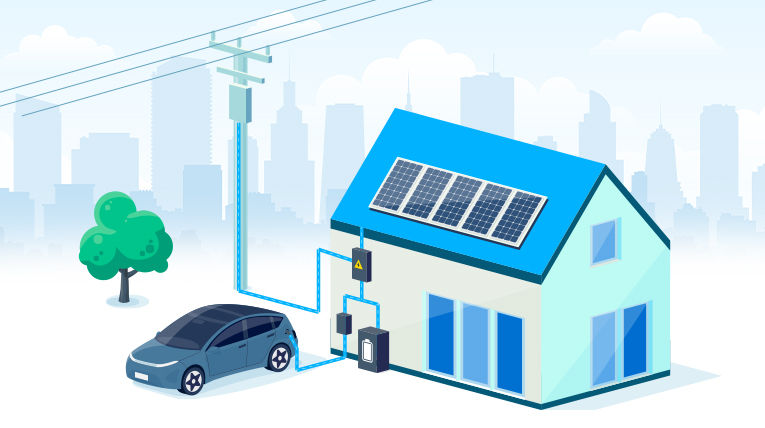
A home battery backup system takes a different approach. Instead of depending on fuel during an emergency, the system stores electrical energy ahead of time and automatically supplies power when the grid goes down. The transition can happen almost instantly, without waiting for an engine to start or worrying about finding gasoline.
For homeowners in New York and New Jersey, where major storms can disrupt both electricity and transportation infrastructure, that distinction deserves serious consideration.
How a Generator Provides Backup Power
Generators have been protecting homes and businesses from power outages for decades, and there is a reason they remain popular. A properly installed generator can produce electricity for extended periods as long as it has an adequate fuel supply.
A standby generator is typically installed outside the home and connected to the home's electrical system through a transfer switch. When the utility power fails, the generator detects the outage and starts its engine. The transfer switch then moves the home's electrical load to the generator.
The generator continues operating as long as the necessary fuel is available.
Depending on the installation, a standby generator may operate using natural gas or propane. Portable generators commonly use gasoline. Each fuel source has advantages and limitations, particularly during a major storm.
Natural gas can be convenient because homeowners do not have to store large quantities of gasoline. However, a natural-gas-powered generator still depends on the gas infrastructure remaining operational.
Portable gasoline generators introduce a different concern. You need to have gasoline available when the power goes out, and you need a safe way to store and transport that fuel.
That becomes especially important during a widespread emergency.
The Fuel Problem During a Major Storm
One of the biggest lessons from Hurricane Sandy was that an electrical outage can create problems far beyond the electrical grid.
Sandy caused major disruptions throughout the New York metropolitan region in 2012. Fuel distribution was severely affected, and many gas stations experienced shortages or could not operate normally.
The New York City government later described the event as one of the most severe fuel shortages in the city's history. Damage to energy infrastructure and interruptions throughout the regional supply chain prevented normal fuel deliveries. The U.S. Energy Information Administration also reported that widespread fuel outages affected retail stations throughout the New York metropolitan area after Sandy. In its emergency monitoring, only about one-third of sampled gas stations were considered operational on November 2, 2012, although availability improved over the following week.
This is an important consideration for anyone thinking about emergency backup power.
A generator may be sitting outside your house, ready to operate, but that does not necessarily mean you will have unlimited access to the fuel required to run it.
Consumer Reports' review of the experience of homeowners during Sandy illustrates the issue. Among the portable-generator owners surveyed, more than 20 percent reported running out of fuel, while others reported problems starting the generator or being unable to power the equipment they needed.
That does not mean generators are ineffective. Properly installed and maintained generators can provide valuable backup power. It does mean homeowners need to consider the entire emergency-power system, including fuel availability, rather than focusing only on the generator itself.
Why Generators Can Be Less Expensive Up Front
One reason homeowners continue to consider generators is simple: the initial cost can be lower.
A generator can provide a substantial amount of power without requiring the purchase of a large battery storage system. For homeowners primarily concerned with keeping a few critical systems operating during an outage, a generator can be an attractive option.
However, the actual cost of generator ownership involves more than the equipment itself.
Depending on the type of generator and home, installation may involve electrical work, a transfer switch, fuel connections, permits, and potentially modifications to an existing gas system. The generator also has an engine, which means mechanical maintenance.
Over time, homeowners need to account for oil changes, inspections, battery maintenance, filters, spark plugs, fuel-system maintenance, and other service requirements depending on the generator.
Fuel is another ongoing cost.
A generator that runs for hours or days during a prolonged outage consumes fuel throughout the event. During a widespread storm, that fuel may become more expensive, difficult to find, or subject to long lines and supply interruptions.
So while a generator may have a lower initial price, homeowners should consider the total cost of ownership over the life of the system.
Why a Home Battery Backup Works Differently
A home battery backup system approaches the problem from the opposite direction.
Instead of creating electricity by burning fuel, the battery stores electrical energy before an outage occurs.
When the grid is operating normally, the battery can charge. When the utility connection fails, the battery can automatically provide electricity to the home.
There is no combustion engine to start. There is no gasoline to purchase. There is no oil to change.
For homeowners who want backup power that is quiet, automatic, and immediately available, this difference can be significant.
PowerSourceEV installs whole-home battery backup systems throughout New York and New Jersey, including the Tesla Powerwall 3 and EcoFlow OCEAN Pro. The company also offers vehicle-to-home solutions that can allow compatible electric vehicles to serve as an additional source of backup power.
Battery Backup Is Available Immediately
One of the most noticeable differences between a generator and a battery backup system is what happens at the exact moment the power goes out.
A generator needs to detect the outage, start its engine, and transfer the electrical load to the generator. Depending on the system and installation, that process can take some time.
A battery system does not have to start an engine.
The stored energy is already there.
That means a properly configured home battery backup system can transition to backup power extremely quickly when the grid fails. For many homeowners, this is one of the biggest advantages of battery storage.
Imagine losing power during a summer storm.
The lights go out. Your refrigerator is suddenly without electricity. Your internet equipment shuts down. Your heating or cooling system may stop operating.
With an appropriately sized battery backup system, the system can respond automatically instead of requiring you to go outside, start equipment, check fuel, or wait for an engine to warm up.
The goal is for the transition to happen without turning the outage into another task for the homeowner.
No Gasoline Runs and No Fuel Hunt
The convenience of a battery becomes even more apparent when an outage lasts for several days.
With a fuel-powered generator, homeowners need to think about how long the fuel supply will last. If the generator uses gasoline, they may need to purchase additional fuel.
During a widespread outage, that can be difficult.
Hurricane Sandy demonstrated exactly how vulnerable fuel availability can become when a major regional emergency disrupts transportation and energy infrastructure. The problem was not simply that some homeowners wanted gasoline. Fuel distribution itself was disrupted.
A battery backup system does not eliminate the need to manage energy. The battery has a finite capacity and eventually needs to be recharged. But the source of that recharge can be electricity from the grid, solar energy when integrated with an appropriate solar system, or other compatible charging sources.
That creates an important distinction.
A generator requires a continuing supply of fuel while it is operating. A battery requires stored energy and a method of recharging it.
For homeowners planning for storms, that difference can be particularly meaningful.
What About a Gas Line?
For homeowners considering a whole-home generator, fuel infrastructure is an important part of the installation conversation.
Depending on the generator, the system may need to connect to a natural gas line or propane supply. That means the property must have an appropriate fuel source and the installation must be completed according to applicable requirements.
For some homes, this is straightforward.
For others, the fuel connection can make the project more complicated.
A battery backup system does not require a natural gas connection to operate. The battery is an electrical energy-storage system rather than a fuel-burning appliance.
That can simplify the concept of emergency power: charge the battery while the grid is available, and use the stored electricity when it is not.
Maintenance Is Another Difference
Generators are mechanical machines.
That means they require maintenance.
A generator contains an engine with moving components and other systems that must remain in working condition. Routine maintenance is important because a generator can sit unused for months and then suddenly be expected to operate during a storm.
That creates a common homeowner problem.
The system may look perfectly fine while sitting outside, but the real test comes when the grid fails.
Regular generator maintenance helps ensure that the equipment is ready when needed.
Battery systems have a different maintenance profile. They do not contain the same type of combustion engine that requires oil changes and other engine-related maintenance.
That does not mean a battery system requires no attention at all. Electrical equipment should still be professionally installed, monitored, and serviced when necessary. But the ongoing maintenance requirements are fundamentally different from those of a fuel-burning generator.
For homeowners who want to minimize the number of mechanical components involved in their emergency-power system, this can be an important consideration.
Noise Matters More Than You Might Think
A generator makes noise.
For some homeowners, this is simply part of having backup power. For others, especially during an extended outage, the constant sound of an engine can become frustrating.
A battery backup system operates much more quietly because it does not rely on an internal combustion engine running continuously to produce electricity.
That can make a noticeable difference during a storm.
When the neighborhood is already dealing with rain, wind, emergency vehicles, tree damage, and other disruptions, having a quiet source of backup electricity can make the home feel considerably more comfortable.
Battery backup can keep important household systems operating without adding another loud mechanical system to the environment around the house.
What Can a Home Battery Power?
The answer depends on the size of the battery system, the home's electrical demands, and how the backup system is configured.
A properly designed whole-home system can be used to support many of the home's important electrical loads. Those can include refrigeration, lighting, communications equipment, heating and cooling equipment, appliances, and other household circuits.
The goal is not simply to install the biggest battery possible.
The goal is to design a system around the home's actual energy requirements.
For example, a homeowner who wants to keep every major appliance operating during an extended outage may have very different storage requirements from someone who primarily wants refrigeration, lighting, internet access, heating, and a few essential appliances.
PowerSourceEV currently offers the Tesla Powerwall 3, listed at 13.5 kWh and described as stackable for whole-home backup, as well as the EcoFlow OCEAN Pro, which can be configured from 10 to 80 kWh and is listed with up to 24 kW of backup capability.
The right configuration depends on the home and the homeowner's goals.
Battery Storage Can Also Work With an EV
For electric vehicle owners, backup power is becoming even more interesting.
Some newer EVs can support bidirectional power flow, allowing energy stored in the vehicle's battery to be used to provide electricity to a home when the appropriate vehicle, charger, and electrical equipment are installed.
This is commonly referred to as vehicle-to-home, or V2H.
Instead of thinking about the EV solely as transportation, homeowners can potentially view the vehicle as another energy-storage resource.
PowerSourceEV offers Tesla Powershare and other V2H solutions, including systems involving compatible GM Energy and Wallbox equipment.
For the right EV owner, this can add another layer of flexibility to a home energy strategy.
Is a Generator Always the Wrong Choice?
No.
There are situations where a generator can make sense.
Generators have a long history of providing dependable backup electricity, and a properly installed standby generator can operate for extended periods when its fuel supply is available.
The important thing is to understand the tradeoffs.
The lower initial equipment cost of a generator can be attractive. Some homeowners may prefer a generator because they already have a suitable natural gas or propane connection. Others may have specific power requirements that make a generator appropriate for their property.
The question is not whether generators work.
They do.
The better question is what kind of backup-power experience you want.
Do you want a fuel-powered engine that starts during an outage and continues producing electricity as long as fuel is available?
Or do you want stored electrical energy that can respond automatically without gasoline, engine noise, or combustion?
Those are very different approaches to emergency preparedness.
The Real Cost of Backup Power
When comparing a generator and a battery backup system, it can be tempting to compare only the purchase prices.
That can be misleading.
A generator may have a lower initial equipment cost, but homeowners should also consider installation, fuel, maintenance, repairs, and the potential inconvenience associated with obtaining fuel during a widespread outage.
A battery backup system may require a larger initial investment, but it changes the ongoing operating model.
There is no gasoline tank to fill before a storm. There is no engine oil to replace. There is no combustion engine starting in the middle of the night. And there is no need to leave home during an outage simply to search for fuel.
The right comparison is therefore not necessarily "generator versus battery price."
It is "what am I paying for, and how do I want my backup power to work?"
Hurricane Sandy Offers an Important Lesson
For homeowners in the New York and New Jersey region, Hurricane Sandy remains an important example of why emergency preparedness has to account for more than the initial power failure.
Sandy did not simply knock out electricity.
It disrupted transportation, fuel distribution, communications, and other infrastructure.
The New York City government's after-action report documented severe disruptions to the regional fuel supply chain. Fuel shortages affected vehicles, emergency operations, and residents throughout the area.
Consumer Reports also found that homeowners using portable generators encountered several challenges, including fuel shortages, starting problems, and insufficient power for their needs.
The lesson is not that every generator failed during Sandy.
Many generators worked.
The lesson is that an emergency backup system is only as resilient as the conditions surrounding it.
If your backup system requires fuel, you need a plan for fuel.
If your backup system requires a gas connection, you need to consider the reliability and installation requirements of that connection.
If your backup system relies on stored electricity, you need to understand battery capacity and recharging.
Every system has limitations.
The key is understanding those limitations before the next storm arrives.
Why Instant Backup Can Make a Difference
Power outages do not wait for convenient moments.
They can happen while you're sleeping, working from home, preparing dinner, traveling, or away from the house.
A backup system that responds automatically means you do not have to be standing next to it when the outage begins.
That can be especially useful for households with important electrical equipment, medical devices, sump pumps, refrigeration, home offices, security systems, or other systems that benefit from uninterrupted power.
Battery storage is particularly well suited to this type of automatic response because the energy is already stored.
There is no engine to start.
There is no fuel to pump.
There is no warm-up period.
The system simply switches to the available stored energy.
Choosing Backup Power for Your Home
There is no universal backup-power solution for every house.
The right choice depends on the home's electrical consumption, the desired backup duration, available infrastructure, budget, and the homeowner's priorities.
For some homeowners, the lower initial cost of a generator may be the deciding factor.
For others, the convenience of battery storage may justify the higher upfront investment.
If you are primarily concerned with running essential systems for a limited period, your energy-storage requirements may be very different from those of someone who wants comprehensive whole-home backup for extended outages.
That is why professional system design matters.
A backup system should be sized around the home, not simply selected from a list of equipment.
At PowerSourceEV, the process includes designing, permitting, installing, and servicing home backup systems, with battery options including Tesla Powerwall 3 and EcoFlow OCEAN Pro.
Battery Backup vs. Generator: The Bigger Picture
A generator can be an effective backup-power solution. It can provide substantial electricity during an outage and, when properly installed and fueled, can operate for extended periods.
But it comes with responsibilities.
You need fuel. You need maintenance. You have an engine that has to start. Depending on the system, you may need a natural gas or propane connection. And during a regional emergency, fuel availability can become a significant issue.
A battery backup system solves the problem differently.
It stores energy before you need it. When the grid fails, that stored electricity can become available almost immediately. There is no gasoline run, no engine oil, and no combustion engine running outside your home.
For homeowners who value quiet operation, automatic backup, minimal routine maintenance, and freedom from fuel logistics, battery storage offers a compelling alternative.
And for electric vehicle owners, vehicle-to-home technology can potentially add another source of stored energy to the equation.
The important thing is to make the decision before the next outage, not while the storm is already approaching.
Prepare Before You Need Backup Power
The worst time to start thinking about backup power is when the weather forecast is already calling for a major storm.
At that point, generators may be difficult to find, fuel stations may have long lines, and electricians and installers may already be dealing with increased demand.
Preparing in advance gives homeowners time to understand their home's energy requirements and choose a system that fits their needs.
Whether you ultimately choose a generator, a home battery, or a combination of energy technologies, the objective is the same: keeping your home functional when the utility grid cannot.
For homeowners considering a battery backup system in New York or New Jersey, PowerSourceEV can help evaluate the available options and design a system around the home.
The conversation does not have to begin with a particular product.
It should begin with a simple question: What do you need your home to do when the power goes out?
Once that question is answered, it becomes much easier to determine how much backup power you need, how long you want it to last, and which technology makes sense for your home.
Backup Power Is About More Than Keeping the Lights On
A power outage is an inconvenience.
A prolonged outage during a hurricane, winter storm, or other major weather event can become something much more serious.
Your refrigerator needs electricity. Your heating or cooling system may need electricity. Your internet connection, security equipment, sump pump, appliances, and other essential systems may all depend on the grid.
A backup system gives homeowners another option.
Generators and batteries simply take different paths to get there.
Generators produce power when they run, but they depend on fuel and mechanical equipment. Batteries store power ahead of time and can make that energy available when the grid fails.
The experience of Hurricane Sandy showed how interconnected electrical power, transportation, fuel, and other infrastructure can be during a major emergency. The goal of modern home backup technology is to give homeowners more control over their own energy resilience.
For many homeowners, especially those looking for an automatic, quiet, fuel-free backup option, a professionally installed battery system can provide a different way to prepare for the next outage.
PowerSourceEV provides home backup power solutions across New York and New Jersey, including Tesla Powerwall 3, EcoFlow OCEAN Pro, and compatible vehicle-to-home systems. By evaluating your home's energy needs before an outage occurs, you can make a backup-power decision based on preparation rather than panic.


Comments